
CASE STUDY
Dubitrade: Making Electrical & Lighting Ecommerce Easier to Navigate
June 22, 2026 · Tasawwur Digital
An illustrative ecommerce transformation case study for Dubitrade, focused on product discovery, catalogue operations and conversion growth.
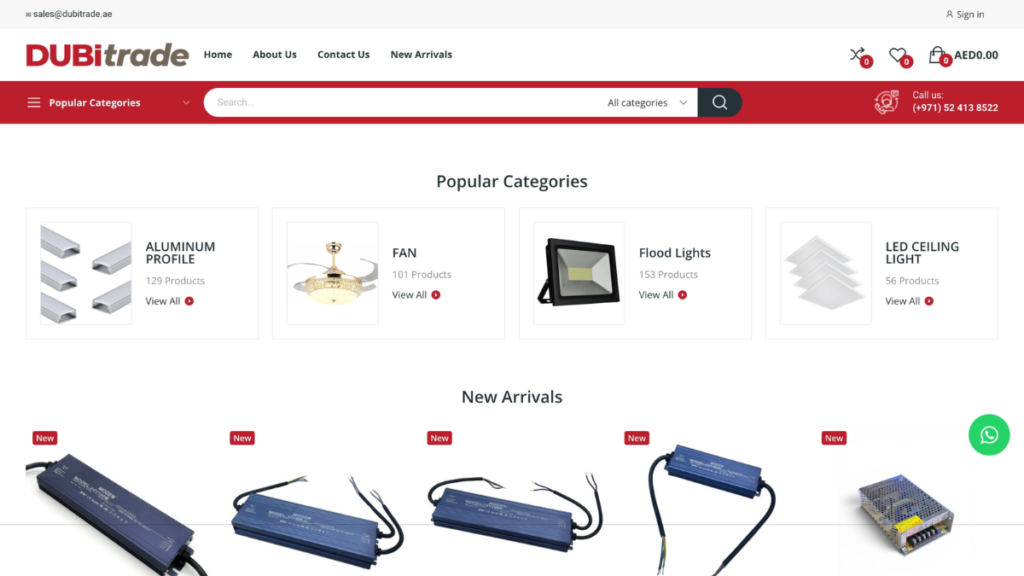
Dubitrade ecommerce experience roadmap—focused on product discovery, catalogue operations and conversion growth across electrical, lighting and trade supplies.
At a glance
- Client: Dubitrade
- Sector: Electrical, lighting and trade-supply ecommerce
- Engagement: Ecommerce experience, catalogue operations and growth analytics
- Market: UAE
The opportunity
Dubitrade’s online store serves customers looking for practical electrical and lighting products, from LED ceiling lights and switches to tools, fans and solar lighting. As the catalogue grows, customers need to find compatible products quickly, compare options with confidence, and move from discovery to checkout without friction.
Tasawwur Digital shaped a scalable commerce experience that would make a broad product range feel easier to navigate while giving the commercial team clearer control over product information, campaigns and performance.
The strategic challenge
In a large technical catalogue, growth is rarely limited to traffic alone. It is often constrained by the quality of the journey after a visitor arrives: whether categories make sense, whether product attributes answer real questions, and whether the team can see where customers hesitate.
- Shoppers had to work too hard to move from a broad category to the right specification.
- Product information, accessories and compatible alternatives needed a more consistent structure.
- Promotional and seasonal collections needed to be easier for the merchandising team to build and measure.
- Leadership needed a clearer view of search demand, conversion paths and catalogue performance.
Our approach
1. Make product discovery practical
We would begin with a customer-journey and catalogue audit, grouping the assortment around how people actually shop: product type, application, room or project, key specification and availability. A refined navigation model, high-intent filters and guided category landing pages would help customers narrow their choice without needing expert product knowledge.
2. Turn product data into a selling tool
A reusable product-data model would standardise the details that matter most—such as wattage, colour temperature, fitting type, protection rating, dimensions, brand and stock status. This structure would support richer comparison, clearer specification tables, related-product logic and more reliable on-site search.
3. Create a conversion-ready buying journey
We would redesign the path from listing to checkout around trust and momentum: clear delivery and returns information, prominent availability cues, concise product benefits, compatible accessories, saved lists and quick reordering for trade customers. The goal is not more interface; it is less uncertainty at each decision point.
4. Give the team actionable visibility
A focused analytics layer would connect catalogue, search and purchase behaviour. Dashboards would highlight no-result searches, high-exit categories, underperforming products and campaign outcomes so that merchandising decisions are based on customer signals rather than guesswork.
Transformation goal: make every product journey feel like a helpful conversation—from “what do I need?” to “this is the right item for my project.”
Projected impact
The following targets define the commercial and operational measures that guide the ecommerce roadmap.
- +28% product-page-to-cart rate through clearer specifications, compatibility guidance and stronger calls to action.
- +21% ecommerce conversion rate by reducing friction between discovery, comparison and checkout.
- −34% no-result searches after improving product taxonomy, synonyms and search rules.
- +18% average order value through relevant accessories, bundles and trade-friendly cross-sell journeys.
- −25% catalogue administration time with a consistent product-information workflow and reusable content patterns.
What success looks like
Dubitrade would have a commerce foundation built for daily usefulness: a faster route to the right products for customers, a cleaner operating model for the internal team, and a data-led way to keep improving. The result is a digital store that can support both immediate transactions and long-term category growth.